

Archive № 002 · Essai

AI is the quartz of customer service
1Homo sapiensHabitat: the forest.
2Machina sapiensHabitat: the office.
Fig. 0 — Image: Bohdan Khamazenko, generated with Midjourney, 23 November 2026
Archive № 002 · Essai · novembre 2026 · 4 min
When a machine makes the answer free, attention becomes the product.
Cette entrée n’est pas encore traduite en français ; voici la version anglaise.
AI is doing to customer service what quartz did to watches. It makes the basic function almost free and almost perfect, and it moves the value of the human version somewhere else.
In 30 seconds
In 30 seconds
What does a person bring that the system doesn’t?
Some clients paid more for a person who knew how they worked.
Quartz didn’t end the watchmaker. It made him expensive.
This essay in four parts
- 011969What quartz didA machine made the time free. The mechanical watch survived as something else.
- 02Before AIThe person, pushed backA year in customer service, when email and a portal already did most of the work.
- 03NowThe machine holds the conversationKlarna, Salesforce, and what customers said when someone asked them.
- 04What followsWhere the human goesAn image from Harari, and the job titles I expect next.
What quartz did
A machine made the time free. The mechanical watch survived as something else.
On 25 December 1969, Seiko released the Astron, the first quartz wristwatch. It kept time to within five seconds a month.1 Over the next fifteen years, Swiss watchmaking lost about two thirds of its jobs.2 Mechanical watches were more expensive and less accurate. By every rational measure, they had lost.

They are still here. A certified mechanical chronometer is allowed to drift by up to six seconds a day,3 and people pay more for it than for a quartz watch that keeps better time. What they pay for stopped being the time. It became the hand behind it: somebody spent hours on this.
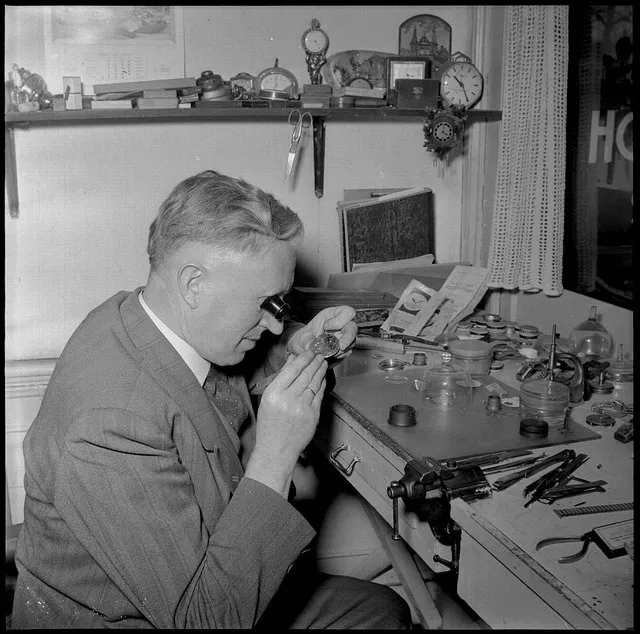
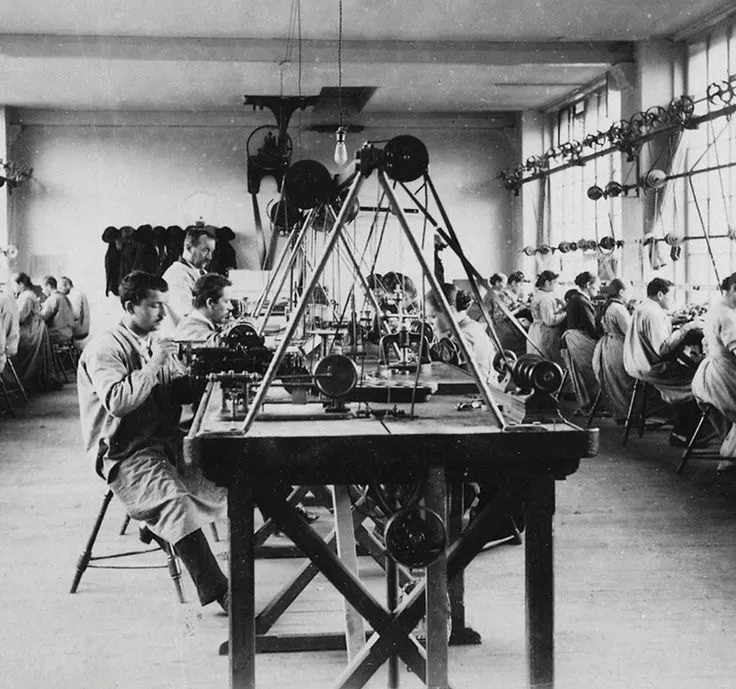
1969 → now
Swiss watchmaking jobs
90,000 → 28,000
Salesforce support staff
9,000 → ≈5,000
The person, pushed back
A year in customer service, when email and a portal already did most of the work.
I spent a year in customer service at a logistics giant with around 110,000 people. AI had barely arrived then. We used it to fix the wording of an email, and nobody around me talked about putting it in front of clients.
The person was already being pushed back anyway. Requests came in by email, many replies went out automatically, and clients tracked shipments on a portal without calling anyone. It worked, and the “where is my truck?” calls went down. Still, we kept coming back to the same conversation: what does a person bring that the system doesn’t?
When I asked my manager what wins clients in transport today, she ranked it: price first, people second. Digital, she said, used to be an advantage and was now the floor. Some clients were ready to pay more for a person who knew how they worked, and the company sold exactly that: a dedicated account manager, full-time or half-time, at a higher price.
I saw why during a client launch I ran. The goal was to prove we delivered on time during the trial period. All the data was in the system. Twice a week, I still sent the client a table I had built myself. It showed nothing the portal couldn’t. What it showed was that someone was watching their account.


The machine holds the conversation
Klarna, Salesforce, and what customers said when someone asked them.
That was email and a portal. Now the machine can hold the whole conversation. In 2024 Klarna said its AI assistant was doing the work of 700 agents. A year later its CEO admitted that cost had weighed too much, that quality had dropped, and the company started hiring people again. Salesforce cut its support team from 9,000 to about 5,000. When Gartner asked customers, 64% said they would rather companies didn’t use AI in service at all. Their first fear was that it would become harder to reach a person.
I don’t read this as AI failing. AI answers well. These stories say that the answer was never all the client was paying for.
Where the human goes
An image from Harari, and the job titles I expect next.
Born in the office
Yuval Noah Harari has an image that explains why. Bureaucracy, he says, was invented only in the last 5,000 to 10,000 years, and we are millions of years older than it.4
We were born in the forest, not in the office.

Habitat: the forest.Millions of years

Habitat: the office.The last 5,000 to 10,000 years
AI was born in the office. For it, bureaucracy is home.
A ticket, a status update, a proof of delivery: that is the office, and I’m happy to hand it to a machine. Two systems can settle a claim between themselves, because they are the same kind of thing. A client who feels let down is back in the forest. They want someone of their own kind on the other side.
When a machine makes the answer free, attention becomes the product.
What follows
The useful question for anyone building a service is where the human goes once the machine takes over the answers. The Swiss watchmakers who survived put the hand where it could be seen. In service, that is the call nobody asked for, the warning that comes before the delay, the person who already knows your constraints. A client notices these things because nothing forced you to do them.
Gartner expects half of the companies that planned to cut service staff because of AI to drop those plans by 2027. My guess is that many will hire people back under other titles. Fewer “customer service agents” and “client assistants”, more “account managers” and “client partners”, sold as a premium. Quartz didn’t end the watchmaker. It made him expensive.
Before
- Customer service agent
- Client assistant
Now
- Account manager
- Client partner
Downloads
Most of these ideas came to me while writing my licence thesis on customer relationships in B2B logistics, in 2025. The full text is here.
Sources
- Seiko Museum Ginza, “World’s First Quartz Watch Astron” (1969).
- Works in Progress, “Watch men”, 2 December 2025.
- Gear Patrol, “The Seiko Quartz Watch That Broke Switzerland”.
- COSC, “Chronometer Certified”.
- Bloomberg, “Klarna Turns From AI to Real Person Customer Service”, 8 May 2025.
- Entrepreneur, “Klarna Is Hiring Customer Service Agents After AI Couldn’t Cut It on Calls”, 9 May 2025.
- ITPro, “Marc Benioff says Salesforce has already cut 4,000 customer support staff for AI agents”, 2025.
- Gartner, press release of 9 July 2024: 64% of customers would prefer that companies didn’t use AI for customer service.
- Gartner, press release of February 2026: half of the companies that cut customer service staff due to AI will rehire by 2027.
- OfficeChai, report on an interview with Yuval Noah Harari, October 2026.
- Business Today, on Yuval Noah Harari’s interview with Věda 24 (ČT24), 20 October 2026.
- Bohdan Khamazenko, “L’art de la relation client : personnaliser pour mieux performer”, licence thesis, IAE Lyon, 2025, including the interview with my manager.